



Hey everyone. If you’ve been keeping up with the news lately or just scrolling through Twitter in pure panic over your Class 12 board marks—you already know that the last few weeks have been an absolute rollercoaster. First, the results drop. Then, thousands of you realize your marks don’t accurately reflect what you actually wrote in the exam hall. You apply for re-evaluation, only to download scanned answer sheets with weird black shadows, mobile phone camera folds, and handwriting that doesn’t even look like yours.
As someone who has been through the intense pressure of board exams and JEE, I can only imagine the mental toll this is taking on you and your parents. The sheer anxiety of knowing your future college admissions depend on a system that seemed to be completely glitching out is terrifying. When you are fighting for decimal points in university cutoffs, every single mark dictates your future.
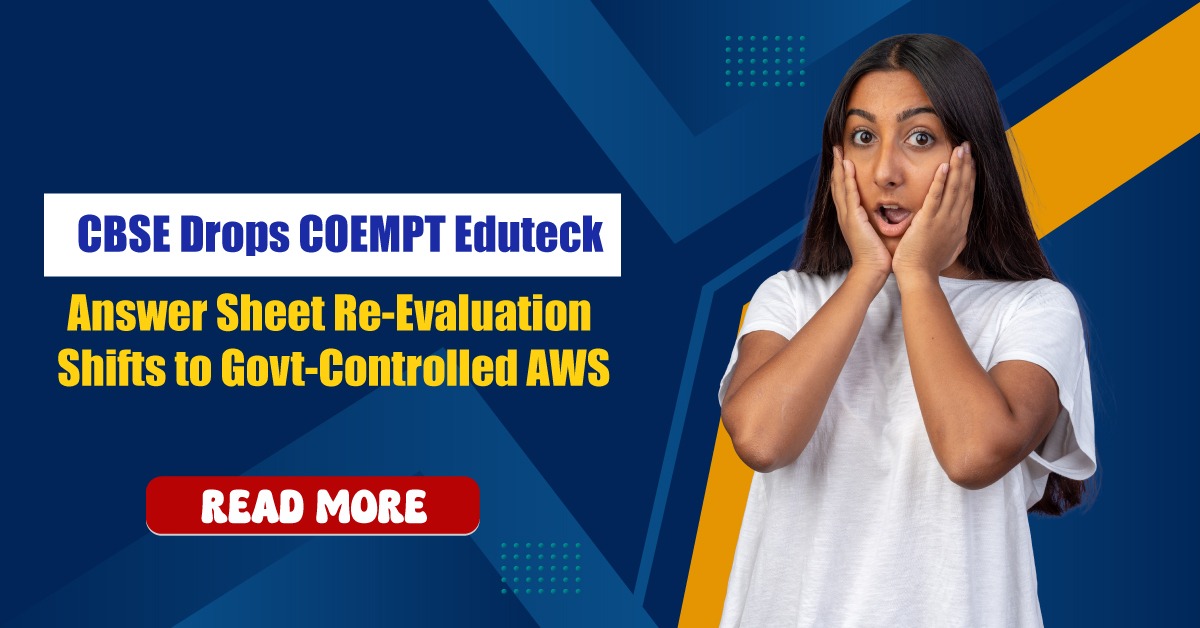
But today, I bring some genuinely massive, positive news. The Central Board of Secondary Education has finally taken a strict step. They have sidelined the controversial private vendor’s storage and shifted the entire backend to secure, government-controlled Amazon Web Services (AWS) servers.
Let’s sit down and talk about exactly what happened, what the CBSE OSM controversy actually is, and how this major server shift is going to directly and positively impact your CBSE answer sheet re-evaluation process.
The Backstory: The OSM Disaster
To understand the solution, you first need to know the problem. This year, the board introduced a massive digital shift called the On-Screen Marking (OSM) system. Instead of teachers physically checking your paper bundles in a school hall, almost 9.9 million Class 12 answer books were scanned and evaluated digitally on computer screens.
To handle this monumental task, the technical contract was given to a Hyderabad-based firm. And almost immediately, things started falling apart.
Students logging into the CBSE rechecking portal were completely shocked. The quality of the scanned PDFs was terrible. There were widespread reports of pages missing, random shadows covering entire answers, and the biggest nightmare of all—some students claimed the uploaded sheets belonged to someone else entirely.
If that wasn’t bad enough, the real hero of this story turned out to be a 17-year-old Class 12 student named Sarthak Sidhant. Imagine being a teenager and standing before a Parliamentary Standing Committee to expose a multimillion-rupee tender flaw. Sarthak wrote a detailed blog comparing the old and new tender documents. He pointed out before lawmakers that crucial eligibility criteria, like the requirement for professional robotic scanners were allegedly dropped just so this specific company could qualify. This explained why the PDFs you downloaded showed physical folds and drop shadows, heavily implying they were scanned via mobile phones instead of professional high-speed scanning machines.
Simultaneously, a 19-year-old ethical hacker named Nisarga Adhikary dropped another bombshell. He discovered that the AWS storage buckets managed by the vendor were practically left completely open to the public. Anyone with basic tech knowledge could easily access the CBSE answer sheet data for the current year. He even flagged that QA engineers were running your personal information through third-party AI scripts. The data privacy violation was scary. The entire CBSE COEMPT Eduteck partnership became a national headline for all the wrong reasons.
The Big Fix: Moving to Government Servers
When ministers, students, and news channels started aggressively demanding accountability, the board finally stepped in to address the growing concerns.
They realized that leaving highly sensitive student data in the hands of a poorly secured third-party infrastructure was a massive risk. So, they initiated a complete, emergency data migration. All your answer sheets, evaluation records, and digital assets have now been pulled from the vulnerable platform and shifted entirely to government-managed AWS servers.
What does this actually mean in plain English?
It means the government has locked the doors. The data is now under strict, direct monitoring by cybersecurity experts from the government and top IITs. The vulnerabilities in the system have been heavily patched, and the external company no longer has unchecked control over where your files are stored. While COEMPT Eduteck will still provide the basic software interface for teachers to mark the papers, the actual ownership and security vault of your files belong solely to the government now.
How This Positively Impacts You
Now, let’s talk about the real reason you are reading this: your marks. How does this massive server migration actually affect your CBSE re-evaluation 2026?
1. Zero Data Tampering Fears
Your biggest fear right now is probably whether your answer sheet could be altered, mixed up, or lost in the digital void. With the data moving to government-secured servers, that risk basically drops to zero. Your hard work is locked in a digital vault that ethical hackers and cybersecurity teams have now fortified. The entire CBSE answer sheet verification process is going to be far more transparent because the backend is no longer an open playground for glitches.
2. A Faster, Smoother Portal Experience
If you tried logging in a few days ago, you probably faced endless loading screens and website crashes. The old infrastructure clearly couldn’t handle the heavy load of 70,000+ students applying for verification. The migration to high-capacity, government-controlled AWS means the portal will finally stabilize. You won’t have to stay awake till 3 AM just to pay the fee or download your scanned copy.
3. Fair Play and Extra Scrutiny
Because this issue has reached parliamentary panels and national news, the board is under immense pressure to deliver flawless results from here on out. The teachers and officials handling your CBSE answer sheet re-evaluation are going to be extra careful. No one wants another national scandal. This means your answers will finally get the serious, focused attention they deserved in the first place.
4. Timelines Remain Unchanged
The absolute best part about this backend shift? It is not going to delay your college admissions. The Ministry of Education has confirmed that the deadlines remain exactly the same. The window for submitting your verification and re-evaluation requests closed on June 7, and the results will be processed as per the original schedule. The migration happened seamlessly in the background so your academic calendar wouldn’t suffer.
Also read: CUET Score Calculator
A Final Advice
I know the last few days have felt incredibly unfair. You put in the hard hours, memorized the derivations, practiced the past year papers, and did everything right, only to be stressed out by an administrative software glitch you had absolutely no control over.
But here is my advice to you: Take a deep breath and let the anxiety go.
The worst of the storm is over. The fact that the government stepped in, deployed IIT cybersecurity experts, and migrated the data to secure servers is a massive victory for student rights. The system has been forced to correct itself because students like you refused to stay quiet.
If you are absolutely confident that you deserve more marks, do not hesitate. Apply for the photocopy of your answer sheet and go for the final re-evaluation step. I have seen countless friends jump a full grade because they believed in what they wrote and fought for it. Trust yourself, and now, you can finally trust that the digital platform won’t lose your paper.
Keep your head up, focus on your upcoming entrance exams or college counseling, and don’t let this administrative hiccup ruin your momentum. You survived the 12th board exams; you will easily survive this.
Also Read: VITEEE, JoSAA & BITSAT Counselling

I am Sheryl Shaunaik Saraf, a student at IIT (ISM) Dhanbad and a proud VMC Alumnus who believes in the power of smart preparation. I write to share the 'insider reality' of JEE prep—bridging the gap between student struggles and exam success. From managing school chaos to acing the JEE exam, I’m here to share the strategies that actually work..
0 Comments